Sunday, July 31, 2011

Do your Thinking in the Fire


What doses that mean? To me it is a strategy similar to playing chess in which success depends upon thinking several moves ahead - a mental step set. The movement of the iron won’t be as tricky as a chess opponent but I need to have a contingency plan if my next move doesn’t accomplish exactly what I intended.


It means having a clear idea of what I want to achieve on this heat. Where does the heat need to be isolated? Does this require a convenience bend or selective slack tub cooling? What color heat is needed? Is the hammer and ancillary anvil tools set up properly?


It wasn’t always the case, but today when I plan a forging session for a project I usually have a written strategic plan or drawings detailing the sequence of steps I imagine. I divide each step into a one-heat-at-a-time tactical plan.


In order to learn something new, some time must be set aside for experimenting and doing test pieces so when it comes time to do the project I don’t expect to be surprised by some bummer problem. On the occasions where that happens I quit and move to another project. A fall back and regroup tactic is best done when the fire is out. And it is one reason I carefully layout somewhat more than I expect to accomplish in the allowed forging time.


http://www.persimmonforge.com/

Saturday, July 30, 2011

Work Which Tells a Story


Over ten years ago I was asked to make a gate which would mount in the doorway between kitchen and dining room of a home. The owners wanted the canine members of the family confined to the kitchen space so visitors, especially young children, wouldn’t be bothered by them.


After deciding the technical details, discussion turned to the design theme and how it might reflect things meaningful to the owners. The clients were intellectual people with backgrounds in psychology and physical therapy and avid readers. Eventually we settled on an interpretation of the opening lines of William Blakes’ Auguries of Innocence. It has served as inspiration for countless other artists.


To see a world in a grain of sand

And a heaven in a wild flower,

Hold infinity in the palm of your hand

And eternity in an hour.


The gate was free to swing both in and out and had a spring catch like the old fashioned garden gate so the over all look might be appropriate to a garden entrance. The sunflower is a natural for Kansas although the poem isn’t specific about the wild flower. Symmetry could suggest a Rorschach inkblot test which a psychologist might appreciate.


With the frame constructed and fitted and these ideas floating around, sketch work was chalked out on the layout table and test pieces were done. The design was necessarily tight because a 3” code was specified based on the dogs snout shape.


Eventually it all came together with the poem guiding the way and was installed and worked well. I got to visit it from time to time which is unusual for most of my projects. Today, I wouldn’t do it the same way and my skills have improved quite a bit but every work is fixed in its own time.


The family mowed to another state after retirement and the gate went with them. They kindly sent me a photo of it in place in its new home. I hope to visit it there eventually and the friends too, of course.


http://www.persimmonforge.com/

Thursday, July 28, 2011

Vise Handle Bumpers


This is a little safety device I’ve used so long it is almost invisible to me. My big Trenton-Fisher is at my main work station. This large vise has a handle which is massive enough that if it falls in the vertical orientation a serious pinch can result if the thumb-index web skin is caught by the terminal ball.


After such a close call I decided to create a bumper by wrapping a leather strip around the handle just below the ball. Later I added some silicone adhesive and even later used duct type tape. I use the vise every day and from time to time the bumper must be refurbished to remain effective.


There are five other post vises around the shop and none of them have handles heavy enough to present enough threat to require bumpers. One has a sinuous “S” curve bent in the handle which seems to have been added by a previous owner and is somewhat effective in preventing the potential free fall.


http://www.persimmonforge.com/

Wednesday, July 27, 2011

Getting Discouraged


Kristopher Skelton operates Alchemy Forge. I think his primary interest is blademaking. I’ve never met him but have enjoyed reading his blog and viewing the website galleries.


In the blog I came across a second, or third, hand narrative which I feel has some wise advice as follows...


MONDAY, MAY 16, 2011

A reminder...


This was posted at Don Fogg's bladesmith forums by Alan Longmire, attributed to Ira Glass:


What nobody tells people who are beginners — and I really wish someone had told this to me . . . is that all of us who do creative work, we get into it because we have good taste. But there is this gap. For the first couple years you make stuff, and it’s just not that good. It’s trying to be good, it has potential, but it’s not. But your taste, the thing that got you into the game, is still killer. And your taste is why your work disappoints you. A lot of people never get past this phase. They quit. Most people I know who do interesting, creative work went through years of this. We know our work doesn’t have this special thing that we want it to have. We all go through this. And if you are just starting out or you are still in this phase, you gotta know it’s normal and the most important thing you can do is do a lot of work. Put yourself on a deadline so that every week you will finish one story. It is only by going through a volume of work that you will close that gap, and your work will be as good as your ambitions. And I took longer to figure out how to do this than anyone I’ve ever met. It’s gonna take awhile. It’s normal to take awhile. You’ve just gotta fight your way through. POSTED BY KRISTOPHER SKELTON

http://alchemyforgenet.blogspot.com/2011_05_01_archive.html


Being able to recognize good work and appreciate the beauty of fine craftsmanship and design is necessary yet not sufficient to producing such work. Practice, practice, practice is essential. Most things worthwhile are difficult to achieve and require dedication, discipline and persistence. I don’t think I have seen any masters who aren’t perfectionists.


For most of us the ideal is elusive and just beyond our grasp so each instantiation of our effort is a bit disappointing and we see how we might do better. Take a deep breath. Take another heat. Take another run at it.


Perhaps it was the word alchemy that set the environment for me to detect and connect the theme of striving and it reminded me of Goethe’s story, Faust. This tale is based on the medieval alchemist and magician Johann Faust, and in it Goethe concludes that man’s salvation lies in his striving and action. He observes that to err is human and as long as one is doing and striving, salvation is ultimately assured. In this metaphor success or satisfaction might better substitute for salvation.


http://www.new-wisdom.org/cultural_history2/6-romanticism/goethe.htm


http://www.persimmonforge.com/

Tuesday, July 26, 2011

Get a Grip


I heard an investment adviser say, “You can’t have too much money.” I’m not sure, but, I’m betting he didn’t have much trouble finding people willing to test that proposition.


I do know I never seem to have too many clamps. My favorite is the original Irwin Vise-Grip 12” large jaw locking pliers. The long nose style and angled long nose and locking C-clamps are handy too.


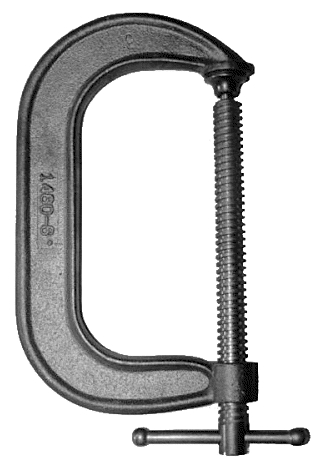
I don’t often have a project large enough to get out the heavy duty screw C-clamps, but, when I need them, I need a bunch of them. Individually, large new ones are pretty expensive - in the $50 neighborhood, but at auctions they are often a bargain. I picked up a box of about 20 a year ago for $25 total.


Even less often I use slide bar clamps. I especially like a heavy antique furniture clamp I found in an antique store years ago.


In the early years I sometimes had to go to the store and get another clamp or two for a job. I got a few more when we got to a job site an hour away and found we forgot to pack the clamps. Baring another slip-up like that I may finally have enough now. It would be interesting, but too much work, to gather them all up for a count. They are widely distributed around the shop and ought to be left alone because they got where they are for a reason.


http://www.persimmonforge.com/

Monday, July 25, 2011

Curious Inventor


I came across this site and thought it might be useful to other blacksmiths so I’m posting it.

http://store.curiousinventor.com/guides


It seems mostly to be designed for interested in electronics and electronic hardware design. There are several reference guides which are more general.


http://store.curiousinventor.com/guides/Metal_Working/Screws


http://store.curiousinventor.com/guides/drill_speed


http://store.curiousinventor.com/guides/tap_drill


http://store.curiousinventor.com/guides/Drill_Letter_and_Number_Decimal_Cross_Ref


Here is another curious site offering many innovative materials for inventors:

http://www.inventables.com/


Check them out. Nothing ventured - nothing gained.


http://www.persimmonforge.com/

Sunday, July 24, 2011

The Tweakers


Quite a few years ago, probably 2002, I was at a Rocky Mountain Smiths Conference and saw a tool in the silent auction labeled "Tweaker." It was a nicely forged and finished tool which had a blade similar to a slotted screwdriver and a "t" handle. It looked handy and when I returned home I forged several from 1/2" 5160 coil spring stock.


Sometime later I heard Tal Harris use the term "tweak" and question whether he should, for correctness, say "tweakify."


I checked a dictionary to confirm that tweaking refers to fine-tuning or adjusting. Tweaks are any small modifications intended to improve a system. Also think, alter, modify, refine, etc.


For the group image, I laid out the three tools at my primary work station. There are several others throughout the shop. Honestly, I will have to say they are mostly just used to pry something loose rather than adjust. I find them one of the most useful small tools and haven’t damaged a screwdriver blade in a long time.


The coil spring steel has held up well. The tips have been made in several shapes, oval, flat and pointed and the blade thickness varies. Originally, I probably made each when doing some specific repetitive project. The tips of some have been dressed a few times.


As I recall, most were made with torch heat. A little ten minute job which seems well worth the effort.


Happy Tweaking or Tweakifying.


http://www.persimmonforge.com/